
What Is Phelan-McDermid Syndrome?
Phelan-McDermid Syndrome (PMS) is a rare genetic condition caused by a deletion or disruption of the SHANK3 gene on chromosome 22. The SHANK3 gene plays a critical role in brain development and synaptic functioning, which helps explain the neurological and developmental features associated with the syndrome.
PMS is considered a rare disorder, estimated to affect approximately 1 in 20,000–25,000 individuals, though it is likely underdiagnosed. It is one of the more common single-gene causes associated with autism spectrum disorder.
Common Characteristics
Phelan-McDermid Syndrome can look different from person to person, but individuals may experience a combination of:
Global developmental delays
Minimal or absent speech
Autism spectrum characteristics
Low muscle tone (hypotonia)
Motor planning and coordination challenges
Sensory processing differences
Intellectual disability (ranging in severity)
Sleep disturbances
Gastrointestinal concerns
Seizures (in some individuals)
Importantly, behavior is communication, and many individuals with PMS communicate in ways that are non-verbal, subtle, and deeply relational. Understanding these forms of communication is essential for meaningful support.
A Strength-Based Perspective
While PMS is often described clinically by challenges, individuals with Phelan-McDermid Syndrome are also known for their unique ways of connecting, strong sensory preferences, and meaningful relationships with trusted caregivers. Support is most effective when it is individualized, respectful, and grounded in both science and compassion.
Because PMS is rare and complex, families often benefit from collaborative, interdisciplinary support that honors lived experience alongside evidence-based practice.
Learn More About Phelan-McDermid Syndrome
Whether you’re newly learning about Phelan-McDermid Syndrome or looking to deepen your understanding, the following trusted resources offer education, research updates, and community support.
-
Supportive, accessible resources focused on lived experience, connection, and advocacy.
Phelan-McDermid Syndrome Foundation (PMSF)
Education, family support, community events, and global advocacy
https://pmsf.orgPMSF Resource Library
Practical guides, webinars, and family-centered materials
https://pmsf.org/resource-libraryPMSF UK
Support and resources for families in the UK and internationally
https://www.pmsf.org.uk
This information is provided for educational purposes and is not intended to replace medical or clinical guidance.
-
Evidence-based medical and genetic overviews from reputable institutions.
NIH – Genetic and Rare Diseases Information Center (GARD)
Clinical overview of Phelan-McDermid Syndrome
https://rarediseases.info.nih.gov/diseases/10720/phelan-mcdermid-syndromeNational Organization for Rare Disorders (NORD)
Detailed explanation of symptoms, causes, and diagnosis
https://rarediseases.org/rare-diseases/phelan-mcdermid-syndromeCleveland Clinic Health Library
Clear, accessible medical overview
https://my.clevelandclinic.org/health/diseases/23087-phelan-mcdermid-syndrome
This information is provided for educational purposes and is not intended to replace medical or clinical guidance.
-
For those interested in genetics, emerging research, and clinical trials.
CureSHANK
Research focused on SHANK3-related conditions
https://www.cureshank.orgPMSF Clinical Trials & Research Updates
Ongoing studies and opportunities to participate in research
https://pmsf.org/clinical-trials
This information is provided for educational purposes and is not intended to replace medical or clinical guidance.
Honoring Ethan Wall & the Legacy That Guides My Work
My commitment to supporting families affected by Phelan-McDermid Syndrome (PMS) is rooted in relationships that shaped both my professional path and my life in lasting ways.
Ethan Wall: A Life That Continues to Guide My Work
In my early years in the field of Applied Behavior Analysis, I had the profound honor of working as a Registered Behavior Technician (RBT) with Ethan Wall. For three years, I had the privilege of knowing, supporting, and loving Ethan.
Ethan was not simply a client—he was a teacher. Through our time together, he shaped how I understand behavior, communication, dignity, and care. He taught me to prioritize connection over compliance, to remain flexible and humane in my clinical work, and to always see the person beyond the diagnosis.
In 2022, Ethan tragically passed away due to complications from Phelan-McDermid Syndrome. His loss was devastating and deeply felt.
After Ethan’s passing, I began journaling as a way to process my grief. What started as private reflection gradually became something more. That journaling evolved into my first book—a memoir written in his honor, reflecting on our journey together, the lessons he taught me, and the profound impact he continues to have on my life and work.
This book was not written as a clinical text, but as an act of remembrance, healing, and meaning-making. It represents my commitment to carrying Ethan’s voice, humanity, and legacy forward.
Legacy, Connection & Continued Learning
Through Ethan’s legacy, I was later introduced to Miles—a connection that further deepened my understanding of PMS beyond professional training alone.
Becoming a personal caregiver for Miles expanded my role from clinician to lived experience. Through this relationship, I gained firsthand medical knowledge and practical insight into:
The complex and evolving nature of PMS
Navigating medical systems and interdisciplinary care
Supporting fluctuating needs over time
Holding space for both grief and growth within families
Miles’ journey reinforced what Ethan first taught me: PMS is not linear, predictable, or easily defined. Meaningful support requires flexibility, humility, and deep respect for each family’s lived experience.
Carrying This Work Forward
Ethan and Miles are inseparable chapters of my story. Ethan’s life and legacy led me to Miles, and together they shaped the clinician, caregiver, advocate, and human I am today.
Because of them, I approach PMS families with:
Deep humility and respect
An understanding of loss, resilience, and transformation
A commitment to care that honors the whole person and the whole family
This work is personal. It is intentional. And it is grounded in both professional expertise and lived love.
When I support PMS families, I do so with the awareness that every journey is unique—and that every individual deserves care that sees them fully.
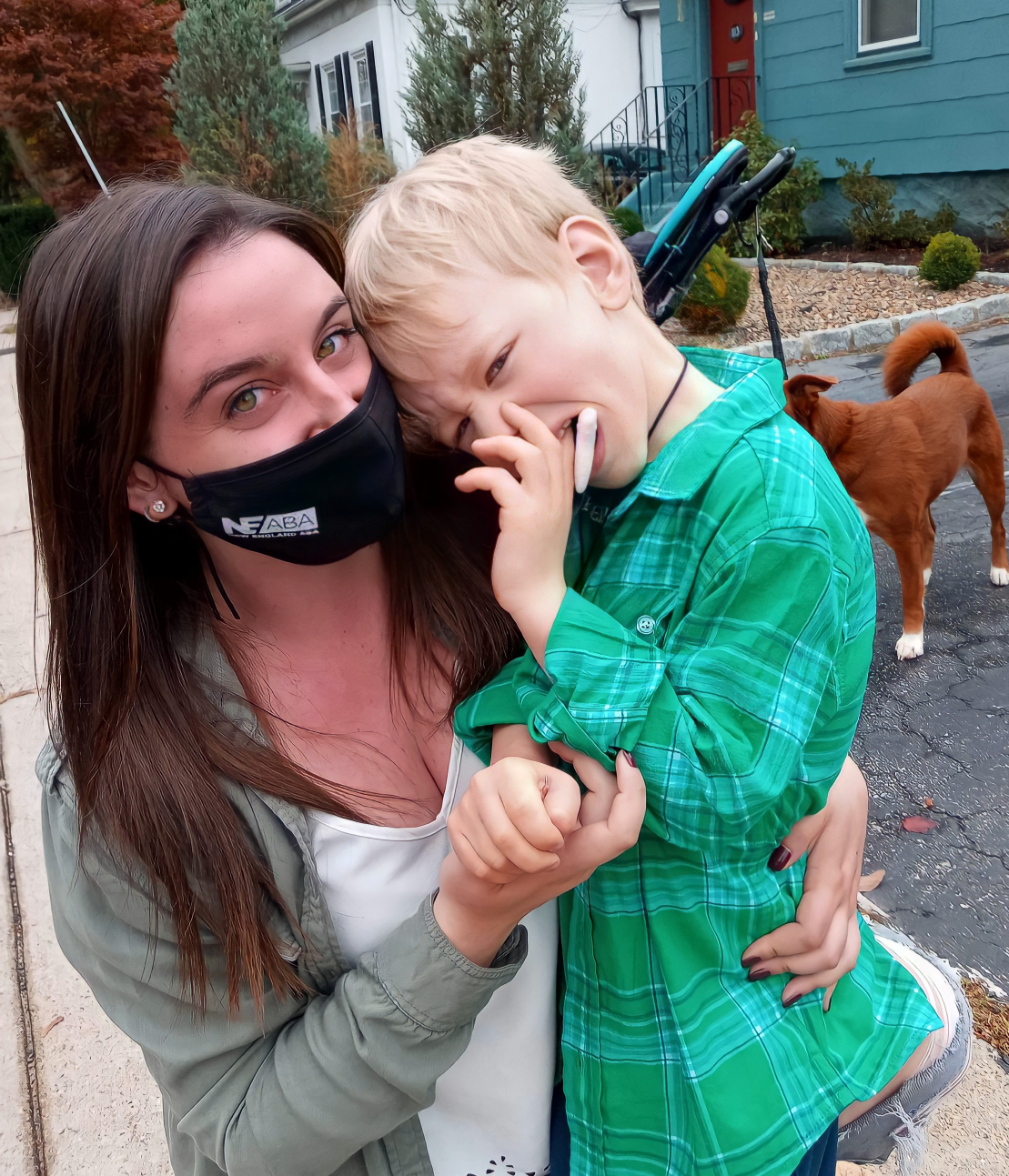
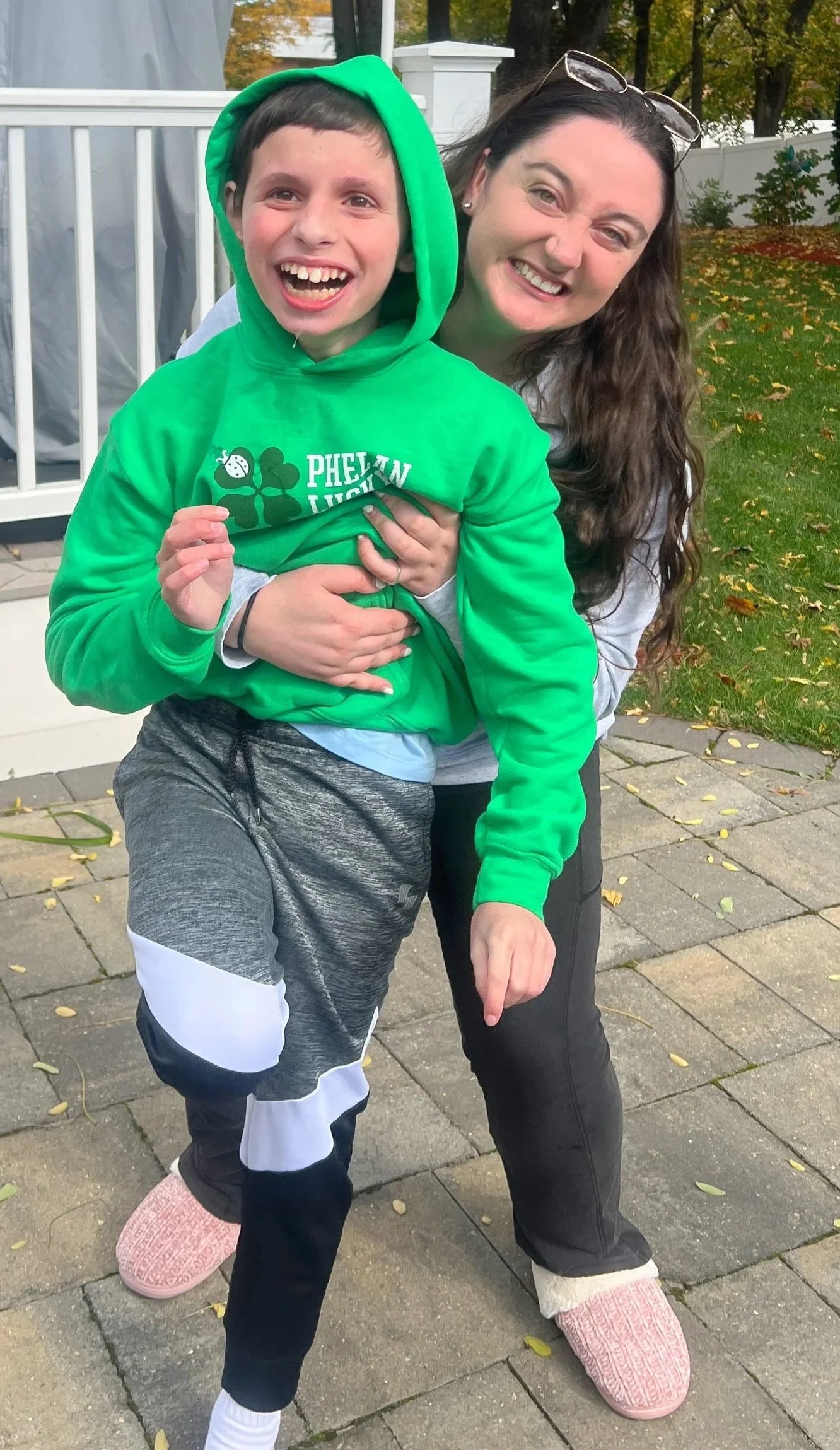
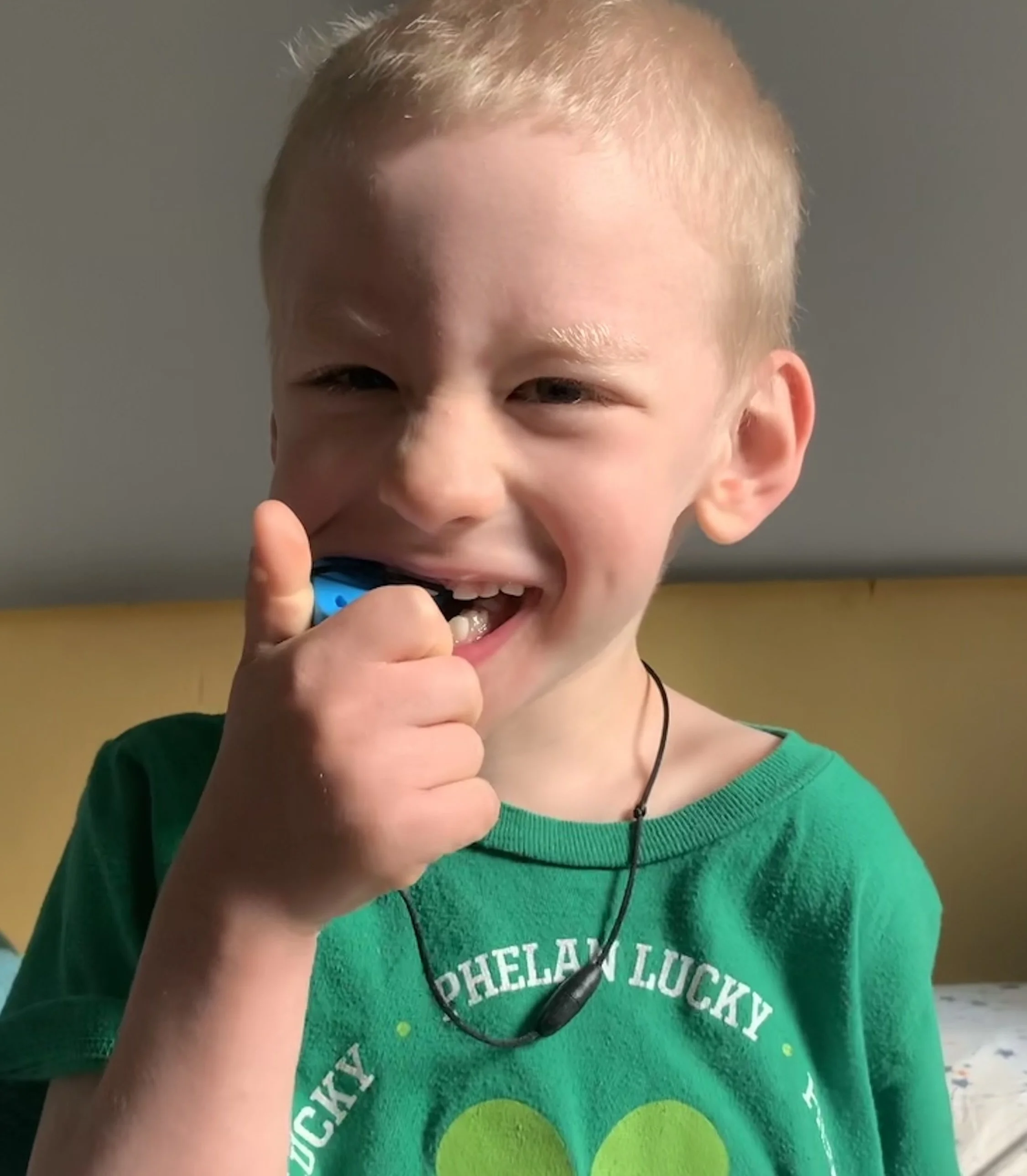

Sadie and Book E Man: Remembering Ethan Wall
Ethan Wall 2019
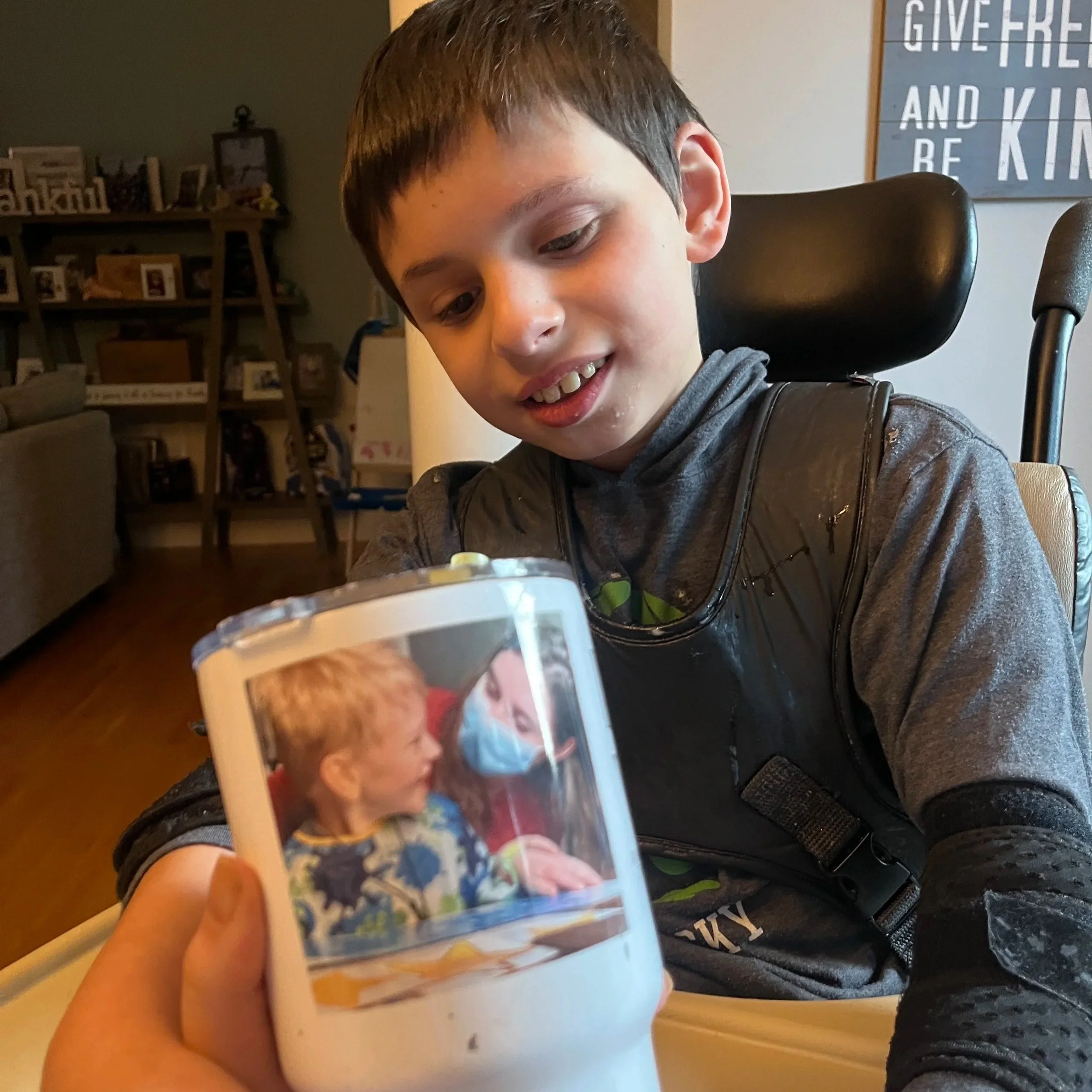
Miles Curtis smiling at Sadie’s cup that has pictures of Ethan Wall on it.
What Makes Me Qualified to Support PMS Families
Board Certified Behavior Analyst (BCBA) with training in evidence-based, ethical, and neurodiversity-affirming practice
Early clinical experience as an RBT supporting an individual with PMS across multiple settings
Personal caregiver experience, providing hands-on medical care, coordination with healthcare providers, and daily problem-solving beyond clinical environments
Deep familiarity with the evolving and unpredictable nature of PMS, including regression, medical complexity, and shifting support needs
Lived understanding of grief, resilience, and growth, shaped by loss, caregiving, and long-term relationships within the PMS community
Strong commitment to collaboration, honoring caregiver expertise and prioritizing quality of life, dignity, and sustainability
My approach blends clinical knowledge with lived insight. I support PMS families with flexibility, humility, and deep respect for the complexity of this journey—meeting families where they are and walking alongside them as needs change.
How PMS Support Is Different
Supporting individuals and families affected by Phelan-McDermid Syndrome (PMS) requires an approach that is flexible, responsive, and deeply individualized.
Unlike more predictable developmental profiles, PMS often involves:
Fluctuating skills and periods of regression
Complex medical needs that impact behavior, learning, and regulation
Significant variability across individuals and across time
Nonlinear progress, where traditional benchmarks may not apply
Because of this, effective PMS support must go beyond standard behavior programming.
My approach emphasizes:
Ongoing reassessment and adaptation, rather than fixed plans
Close collaboration with caregivers and medical teams
Support for communication, regulation, and quality of life, not just behavior reduction
Compassionate pacing, recognizing caregiver capacity and emotional load
Respect for grief and uncertainty, alongside hope, growth, and meaningful connection
PMS support is not about pushing progress—it is about building sustainable systems of care that honor the individual, the family, and the realities of this syndrome.