Back-to-School, But Make It Gentle
#KeepCalmAndCheckTheVisualSchedule
A new school year can bring excitement, nerves, forgotten passwords,
missing shoes, snack requests at the worst possible moment, and a whole lot of adjusting.
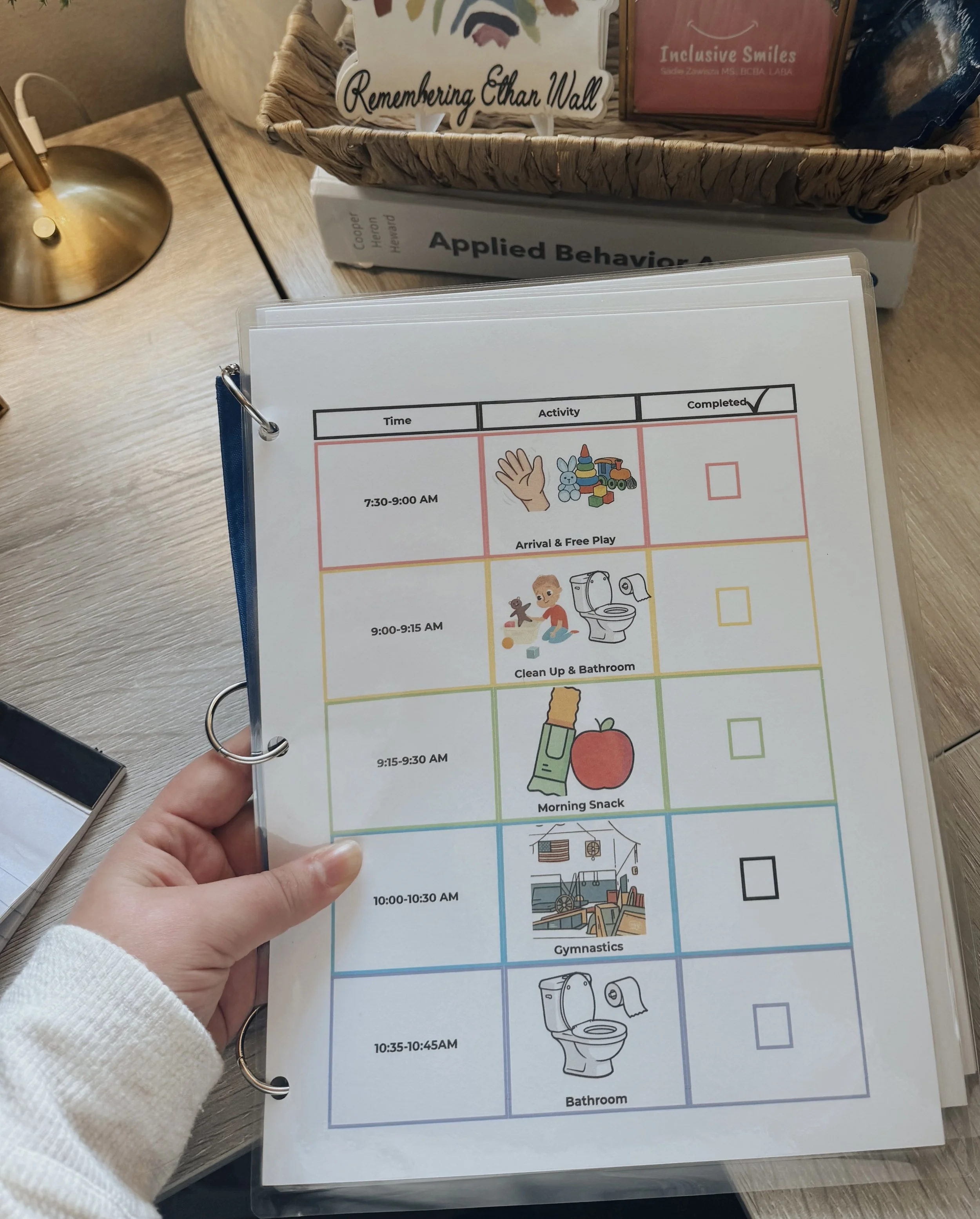
From a BCBA perspective, this transition is not about creating a perfect schedule or expecting everyone to adapt immediately. It is about setting up the environment for success, noticing what behavior may be communicating, and building routines one manageable step at a time.
Start small.
Choose two or three parts of the day that would benefit most from consistency. Maybe it is getting dressed, beginning schoolwork, transitioning away from a preferred activity, or settling into bedtime.
Make expectations clear and realistic. A simple visual schedule, short checklist, or “first–then” reminder can reduce uncertainty:
“First we finish getting dressed, then we can choose the music.”
“First ten minutes of work, then a movement break.”
Before a transition, give a little warning. Some children do well with a timer, while others respond better to a calm verbal reminder or a visual countdown. The best support is the one that works for your child, not simply the one that looks best on paper.
Offer choices when you can. Choices give children an appropriate way to have some control:
- “Do you want to start with reading or math?”
- “Would you like to work at the table or on the floor?”
- “Do you want a two-minute break or a five-minute break?”
- Notice and encourage the behaviors you want to see more often. Be specific:
- “You started when the timer went off—that was flexible.”
- “You asked for a break instead of walking away. Great job telling me what you needed.”
- “You came back and tried again, even though it was hard.”
When behavior happens, pause before labeling it as “bad” or “defiant.” Ask what your child may be trying to communicate.
- Are they confused?
- Is the task too difficult or too long?
- Are they trying to delay or escape something?
- Do they need attention, movement, help, or a break?
Understanding the reason does not mean removing every expectation. It helps us respond in a way that teaches a more useful skill.
And when the day starts going sideways, regulate first.
Learning is difficult when anyone, child or adult, is overwhelmed. Get some water. Have a snack. Move your body. Lower the noise. Take a few breaths. Then return to one small, achievable step.
Parents need support and reinforcement, too.
Notice what you handled well. Make room for something that helps you feel like yourself. Ask for help before you are completely depleted. A routine should support your family, not become another standard you feel you are failing to meet.
This season, ask yourself:
- What parts of our day are already working?
- Which routine would make the biggest difference if it became a little easier?
- What might my child’s behavior be communicating?
- What skill can we teach instead of simply saying “stop”?
- What is one personal goal I want to return to?
- What would “good enough” look like for our family?
Some days will flow. Some days absolutely will not. Behavior is information, progress is rarely a straight line, and needing to adjust the plan does not mean the plan failed.
You can pause.
You can reconnect.
You can teach the skill again. You can begin again after lunch.
A successful school year does not have to look perfect. It needs to feel supportive, achievable, and responsive to the people living it, you included!
Wishing everyone a warm, positive, and successful school year!